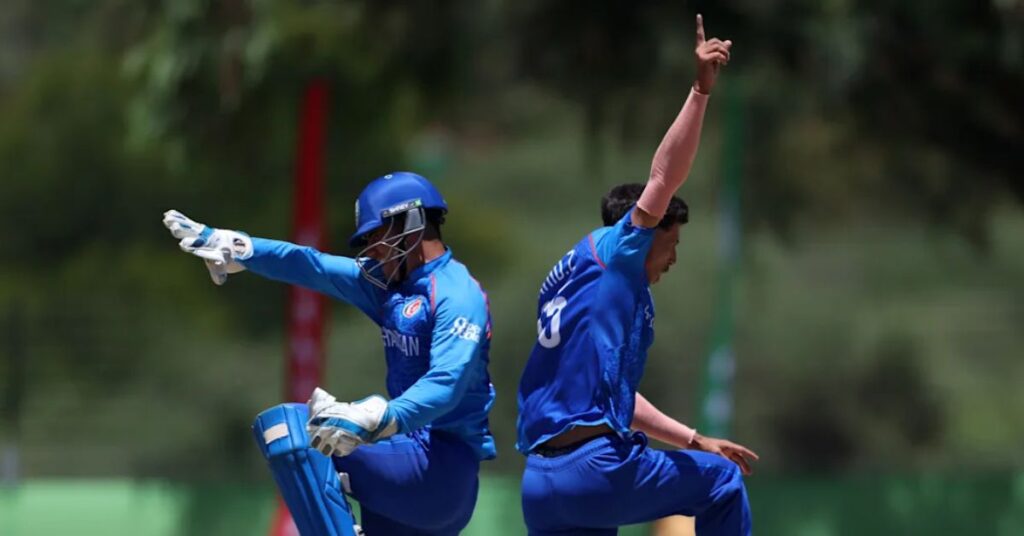

Afghanistan’s rise in world cricket has been one of the most compelling stories of the last decade, and at the ICC Under-19 World Cup, that journey continues with growing confidence and maturity. After a dominant group-stage victory, Afghanistan surged to the top of Group D, prompting star bowler Wahid Zadran to praise a complete team performance rather than individual brilliance.
Speaking after the match, Zadran’s words reflected the ethos of this Afghanistan U19 side—disciplined, united, and hungry to prove that their recent success is no coincidence. The win was not built on one standout spell or a single big innings; it was the product of collective execution across batting, bowling, and fielding.
This SEO-optimised, in-depth blog explores Afghanistan’s commanding U19 World Cup win, Wahid Zadran’s impact and leadership, the tactical strengths of the team, key moments from the match, and what topping Group D means for Afghanistan’s ambitions in the tournament. The structure and narrative are intentionally varied to keep the reading engaging and non-monotonous.
A Statement Win at the Right Time
Group-stage matches at an Under-19 World Cup are about more than points. They shape confidence, define identity, and send messages to rivals. Afghanistan’s latest victory did all three.
By securing a strong win and moving to the top of Group D, Afghanistan:
- Strengthened their qualification prospects
- Built momentum heading into tougher fixtures
- Reinforced belief within the squad
For a team still considered underdogs by many, performances like these steadily change perception.
Wahid Zadran: Leading With Skill and Perspective
As one of the standout bowlers in the Afghanistan U19 setup, Wahid Zadran has become a central figure—not just for his wickets, but for his maturity.
After the match, Zadran was quick to shift focus away from personal achievements. His emphasis on teamwork highlighted:
- The bowling unit’s collective discipline
- Batters setting up defendable totals
- Fielders converting chances consistently
Such comments reveal a player thinking beyond individual success and toward long-term team goals.
Bowling as a Unit: Pressure, Not Just Wickets
Afghanistan’s bowling performance was built on pressure rather than pace alone.
Key aspects of their bowling display included:
- Consistent line and length
- Smart use of variations
- Patience during partnership-building phases
Zadran’s spell was important, but it was complemented by support from the other bowlers, ensuring that opposition batters never settled.
Early Breakthroughs Set the Tone
The foundation of Afghanistan’s win was laid early. Quick wickets in the powerplay:
- Put the opposition on the defensive
- Forced a change in batting plans
- Allowed Afghanistan to dictate field placements
These early breakthroughs meant Afghanistan were always one step ahead tactically.
Middle-Overs Control: The Deciding Phase
In youth cricket, the middle overs often determine whether a team dominates or merely competes. Afghanistan excelled in this phase.
Their bowlers:
- Cut off easy singles
- Forced batters into risky shots
- Maintained intensity despite slowing run rates
This control gradually tilted the match firmly in Afghanistan’s favour.
Batting Contribution: Setting the Platform
While the bowlers grabbed headlines, Afghanistan’s batters did the hard work earlier in the match.
Their batting approach was characterised by:
- Sensible shot selection
- Strong partnerships
- Awareness of match conditions
Rather than chasing quick runs, the batters focused on building a total that bowlers could defend with confidence.
Composure Under Pressure
One of the most encouraging signs for Afghanistan was their composure during brief momentum shifts.
When the opposition threatened a recovery:
- Afghanistan avoided panic
- Bowlers stuck to plans
- Fielders remained sharp
This calmness under pressure is often what separates competitive teams from tournament contenders.
Fielding: The Unsung Difference
In Under-19 tournaments, fielding standards can vary. Afghanistan stood out by maintaining intensity throughout the innings.
Their fielding effort included:
- Sharp catching
- Quick ground fielding
- Energetic support for bowlers
These small contributions added up, tightening the screws on the opposition.
Wahid Zadran’s Spell in Context
While Zadran downplayed individual praise, his spell was undeniably influential.
What made his performance effective was:
- Accuracy rather than raw pace
- Ability to exploit conditions
- Smart reading of batters’ intentions
He bowled like a leader—setting examples and allowing others to follow.
Afghanistan’s Growing U19 Cricket Culture
Afghanistan’s success at youth levels is no longer surprising—it is systematic.
Their U19 structure now emphasises:
- Early exposure to competitive cricket
- Strong bowling fundamentals
- Mental toughness under pressure
This approach has consistently produced players ready for international challenges.
Topping Group D: What It Means
Moving to the top of Group D is significant, but Afghanistan are aware that the tournament is far from over.
Being group leaders:
- Boosts confidence
- Improves knockout positioning
- Increases expectations
Managing these expectations will be as important as maintaining performance levels.
Learning from Senior Afghanistan Teams
The U19 side clearly draws inspiration from Afghanistan’s senior teams, known for:
- Fearless bowling attacks
- Strong spin and seam combinations
- Competitive mindset against stronger nations
This continuity across age groups reflects healthy cricketing development.
Opposition Struggles Under Sustained Pressure
Afghanistan’s victory was not the result of opposition collapse alone—it was engineered.
The opposing team struggled because:
- They were denied easy scoring options
- Pressure mounted over overs
- Mistakes were punished immediately
This ability to force errors is a hallmark of strong teams.
Coaches’ Influence Behind the Scenes
Behind Afghanistan’s disciplined display lies effective coaching.
The coaching staff’s role is evident in:
- Clear role definition
- Tactical clarity in bowling plans
- Emphasis on team-first mentality
Zadran’s post-match comments reflected these values clearly.
Youth Cricket and Mental Strength
Under-19 tournaments often expose mental weaknesses. Afghanistan showed resilience well beyond their years.
Their mental strengths included:
- Patience in long spells
- Confidence after setbacks
- Focus on process rather than outcome
These traits bode well for their future at senior levels.
Why This Win Matters Beyond Points
This victory matters not just for the table, but for Afghanistan’s broader cricketing narrative.
It:
- Reinforces belief in their youth system
- Sends a message to traditional powers
- Encourages young players back home
Success at U19 level fuels the next generation.
Wahid Zadran as a Future Leader
Zadran’s calm, team-oriented mindset suggests leadership potential.
Attributes that stand out include:
- Accountability
- Communication
- Willingness to share credit
Such qualities are invaluable in tournament environments.
Challenges Ahead in the Tournament
Despite their strong start, Afghanistan face challenges:
- Stronger opponents in later stages
- Increased scrutiny
- Pressure of expectations
How they adapt will define their campaign.
Maintaining Momentum Is Key
Many teams start well but fade. Afghanistan’s focus must be on:
- Consistency
- Fitness management
- Tactical adaptability
The group stage is only the beginning.
Fans and Observers Take Notice
Cricket observers have praised Afghanistan’s U19 side for:
- Discipline beyond age level
- Tactical awareness
- Strong bowling depth
Such recognition highlights how far Afghan cricket has come.
A Win Built on Unity
The most striking feature of this victory was unity.
Every player:
- Contributed in some way
- Supported teammates
- Stayed engaged throughout
This unity was at the heart of Zadran’s praise.
Conclusion
Afghanistan’s strong U19 World Cup win, which propelled them to the top of Group D, was a textbook example of team cricket. Star bowler Wahid Zadran’s post-match comments captured the essence of the performance—discipline, unity, and collective responsibility.
Rather than celebrating individual milestones, Afghanistan celebrated process and execution. Their bowlers applied relentless pressure, batters built a solid foundation, and fielders ensured no easy moments for the opposition.
As the U19 World Cup progresses, Afghanistan are no longer just participants—they are contenders. And if they continue to combine talent with teamwork, as they did in this victory, their journey in the tournament could go much deeper.
For now, one thing is clear: Afghanistan’s future in world cricket continues to look bright, disciplined, and fearless.